
How to Promote Your Music as an Independent Artist
Promoting music is an important part of building an independent music career. How to promote your music effectively can help independent artists reach new listeners, build stronger connections with fans, increase music discovery, and create opportunities for long-term audience growth. A successful music promotion strategy is not only about posting a new song online; it involves understanding your audience, creating useful content, choosing the right platforms, and consistently communicating your artistic identity.
For independent musicians, how to promote your music is therefore an important question. Promotion is not simply about posting a song repeatedly and hoping people listen. It involves creating awareness, communicating the artist’s identity, building anticipation, sharing useful or entertaining content, and developing genuine relationships with listeners.
Modern independent artists have more promotional opportunities than previous generations. Digital platforms, social media, streaming services, video content, email communication, live performances, and direct fan engagement can all become part of a broader music promotion strategy.
The challenge is deciding what to prioritize.
A successful promotion strategy does not require an artist to be everywhere at once. Instead, it should connect the music with the artist’s identity and give listeners multiple opportunities to discover and remember the work.
Quick Answer: How to Promote Your Music
How to promote your music effectively starts with understanding your audience, defining your artist identity, preparing your release properly, creating promotional content, using relevant digital platforms, and consistently engaging with listeners.
A simple promotion process can look like this:
Create → Prepare → Announce → Release → Promote → Engage → Analyze → Improve
First, create music that represents your artistic direction.
Then prepare the release and promotional material before the song becomes publicly available.
Build anticipation before release day.
After releasing the music, continue promoting it through different types of content rather than treating release day as the end of the campaign.
Most importantly, promotion should help people discover the artist behind the song rather than simply generating temporary attention.
Key Takeaways
- How to promote your music depends on your goals, audience, genre, resources, and career stage.
- Music promotion should begin before the release date.
- A recognizable artist identity can make promotional content more consistent.
- Social media can support discovery, storytelling, and fan engagement.
- Short-form video can introduce songs to new audiences.
- Streaming platforms can help listeners discover and save music.
- Live performances can combine promotion, networking, and audience development.
- Consistency is usually more sustainable than posting constantly without a strategy.
- Independent artists can use multiple promotional channels instead of relying on one platform.
- Analytics can help artists understand what content and releases are connecting with listeners.
- Genuine fan relationships are more valuable than focusing only on follower numbers.
- Music promotion should support a long-term independent music career rather than one release.
What Does Music Promotion Mean for an Independent Artist?
Music promotion is the process of helping people discover an artist, song, album, EP, performance, or broader creative identity.
For an independent artist, promotion can involve much more than advertising.
It can include:
- Social media content
- Music videos
- Short-form videos
- Behind-the-scenes content
- Artist interviews
- Live performances
- Release announcements
- Email communication
- Streaming platform profiles
- Fan communities
- Collaborations
- Playlists
- Press opportunities
- Direct communication with listeners
The purpose is not necessarily to use every available channel.
Instead, artists should identify the channels where their potential listeners are most likely to pay attention.
Why Learning How to Promote Your Music Matters
An artist can create an excellent song and still struggle to reach an audience.
This does not necessarily mean the music lacks quality.
People cannot listen to music they never discover.
This is why learning how to promote your music becomes an important part of the modern independent artist career.
Promotion creates opportunities for discovery.
Discovery can lead to listening.
Listening can lead to follows, saves, shares, conversations, concert attendance, merchandise purchases, or long-term support.
However, these outcomes are not guaranteed.
Music promotion should therefore be viewed as a process of creating opportunities for people to discover and connect with your work.
How to Promote Your Music Before Release Day
One of the biggest mistakes independent artists can make is waiting until release day to begin promotion.
A song can be promoted before listeners can actually hear the complete track.
This creates curiosity and gives the audience a reason to pay attention when the release becomes available.
Before releasing a song, artists can use Spotify for Artists to prepare their release and explore available promotional opportunities.
Create a Release Timeline
Before deciding how to promote your music, create a simple timeline.
Your plan might include:
Several weeks before release
- Finalize artwork
- Prepare promotional photographs
- Create short video clips
- Prepare artist information
- Plan social media content
- Announce the upcoming release
Closer to release
- Share previews
- Introduce the song’s story
- Publish behind-the-scenes material
- Remind followers about the release date
- Encourage listeners to follow or save the artist
Release week
- Share the official release
- Publish performance or lyric content
- Respond to listeners
- Share relevant reactions
- Continue introducing the song to new audiences
This approach gives the release a longer promotional life.
How to Promote Your Music With a Strong Artist Story
Music promotion becomes more interesting when there is a story behind the song.
This connects directly with the songwriting work discussed in the previous article about meaningful songs. A song can become more memorable when listeners understand the emotion, experience, idea, or creative process behind it.
Instead of only saying:
“My new song is out now.”
An artist might explain:
- What inspired the song
- Where the idea came from
- What emotion influenced it
- How the lyrics developed
- What the song means personally
- What listeners might connect with
This gives audiences something to engage with beyond the release itself.
How to Promote Your Music Through Social Media
Social media can be useful for independent musicians because it allows artists to communicate directly with potential listeners.
However, successful music promotion does not require every post to be a direct advertisement.
Artists can create different types of content.
Educational Content
Share insights about:
- Songwriting
- Recording
- Music production
- Instruments
- Vocal techniques
- Creative processes
Storytelling Content
Talk about:
- The meaning behind a song
- Personal inspiration
- Creative challenges
- Experiences that influenced the music
Performance Content
Share:
- Live performances
- Acoustic versions
- Rehearsals
- Studio performances
- Short musical moments
Behind-the-Scenes Content
Show listeners what happens before a song reaches them.
This could include:
- Recording sessions
- Writing sessions
- Studio preparation
- Instrument selection
- Artwork development
- Rehearsals
These different content types can make an artist’s online presence feel more authentic and less repetitive.
How to Promote Your Music With Short-Form Video
Short-form video has become an important format for music discovery.
An artist can use short clips to introduce a song without immediately asking viewers to listen to the entire track.
For example, a short video could feature:
- The strongest lyrical moment
- A memorable chorus
- A live performance
- A studio recording
- The story behind one lyric
- An emotional reaction
- A songwriting demonstration
The goal is not simply to create viral content.
The goal is to create a reason for someone unfamiliar with the artist to become curious.
How to Promote Your Music Through Your Artist Identity
Promotion works better when the content feels connected to the artist.
Your existing independent music artist career strategy emphasizes recognizable identity, creative direction, storytelling, visual presentation, and consistency. Those same elements should carry into music promotion rather than being treated as separate activities.
For example, an artist might consistently use:
- A recognizable visual style
- Similar storytelling themes
- A distinct tone of communication
- Consistent photography
- A recognizable performance style
- Recurring creative themes
This does not mean every post should look identical.
It means listeners should gradually recognize the creative world behind the music.
How to Promote Your Music Without Constantly Selling
One of the most important principles of sustainable promotion is balance.
If every post says:
“Listen to my song.”
“Buy my song.”
“Stream my song.”
“Share my song.”
the audience may eventually stop paying attention.
Instead, create content that gives listeners something valuable or interesting.
Tell a story.
Perform something.
Share an idea.
Show your creative process.
Answer a question.
Discuss an experience.
Then naturally introduce the music when it fits.
This approach can make promotion feel more like communication and less like advertising.
How to Promote Your Music and Build Real Fan Relationships
A follower is not automatically a fan.
A listener may discover one song and never return.
A genuine fan relationship develops over time through repeated positive experiences with the artist.
Independent musicians can encourage this relationship by:
- Responding to comments
- Thanking listeners
- Sharing fan reactions
- Creating personal updates
- Inviting audience participation
- Performing live
- Sharing exclusive content
- Communicating consistently
This is especially important because your previous music-business article identified audience development and direct fan support as important parts of an independent music career.
Promotion should therefore not stop when someone clicks “play.”
The longer-term goal is to give that listener a reason to stay connected.
Expert Insight
The strongest music promotion does not make an artist look bigger than they are.
It makes the artist’s real identity easier to discover.
An independent musician does not necessarily need a huge promotional budget to begin building an audience. What matters is having a clear creative identity, meaningful music, consistent communication, and a realistic promotional process that can be maintained over time.
A song may take time to find its audience.
That does not mean the promotion failed.
Sometimes one listener discovers a song today, another discovers it months later, and another finds it through a live performance or recommendation much later.
Long-term consistency can therefore be more valuable than expecting immediate results from every release.
How to Promote Your Music Before a Release
A strong music promotion campaign should begin before the song becomes publicly available. Waiting until release day can limit the amount of time listeners have to discover the artist and become interested in the upcoming track.
Learning how to promote your music before release gives you an opportunity to create anticipation and prepare your audience.
Instead of treating release day as the starting point, think of it as the moment when your previous promotional efforts come together.
Before release, an independent artist can prepare:
- Cover artwork
- Short-form videos
- Song previews
- Behind-the-scenes content
- Artist photographs
- Lyrics or selected lyric lines
- Release announcements
- Press information
- Social media posts
- Performance clips
Having these materials ready can make the release process more organized and consistent.
Create a Music Promotion Timeline
A simple timeline can help prevent last-minute promotion.
For example:
Early preparation: Finalize the song, artwork, artist information, and promotional content.
Pre-release period: Begin introducing the upcoming release and sharing the story behind it.
Release week: Increase communication and direct interested listeners toward the new music.
After release: Continue sharing content, performances, reactions, and different ways to experience the song.
This approach allows one song to generate multiple pieces of content rather than relying on a single announcement.
How to Promote Your Music With a Release Strategy
A release strategy gives your music promotion a clear direction.
Without a strategy, an artist may post randomly, repeat the same message, or stop promoting the song too quickly.
A basic release strategy should answer several questions:
- Who is the song for?
- What is the central story?
- What makes the release interesting?
- Which platforms will be used?
- What content will be created?
- When will each piece of content be published?
- What action should interested listeners take?
The answers do not need to be complicated.
The purpose is simply to make your promotional activity intentional.
Give Every Release a Story
A song becomes easier to promote when you know what you want people to understand about it.
The story might involve:
- The inspiration behind the song
- A personal experience
- A specific emotion
- A relationship
- A social observation
- A creative transformation
- A meaningful lyric
- The recording process
This connects naturally with your existing article about how to write meaningful songs, where songwriting is approached through emotion, experience, and storytelling.
Instead of promoting only the finished recording, you can promote the journey that created it.
How to Promote Your Music on Social Media
Social media can provide independent artists with a direct way to communicate with listeners.
However, effective social media promotion is not simply about publishing the same song link repeatedly.
Different types of content can introduce different sides of the artist.
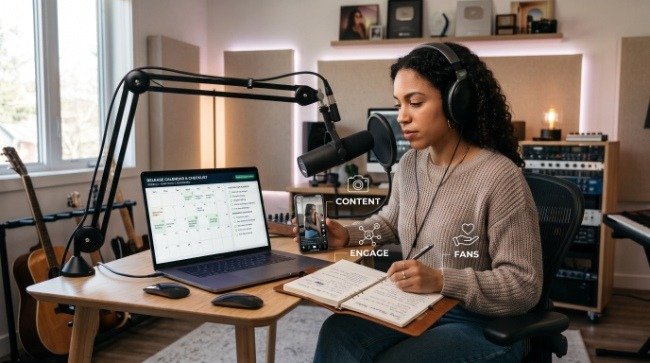
Use Music Performance Content
Performance content allows listeners to experience the artist rather than simply seeing a promotional graphic.
You could share:
- Acoustic performances
- Live recordings
- Rehearsal clips
- Studio performances
- Instrumental sections
- Vocal performances
- Short versions of songs
A strong performance clip can also give someone who has never heard your music a reason to explore more.
Use Storytelling Content
Storytelling is particularly valuable for singer-songwriters and independent artists.
A short video explaining why a particular lyric was written may create more curiosity than a generic promotional announcement.
You can discuss:
- Where the idea started
- Why a particular lyric matters
- What changed during songwriting
- What the song represents
- What listeners might take from it
This helps transform a song from a file or streaming link into part of a larger artistic story.
Use Behind-the-Scenes Content
People often enjoy seeing how music is created.
Behind-the-scenes content could show:
- Writing sessions
- Recording sessions
- Rehearsals
- Studio preparation
- Instrument choices
- Vocal recording
- Artwork creation
This type of content can make the artist feel more accessible while giving fans additional reasons to remain interested.
How to Promote Your Music With Short-Form Videos
Short-form video can be used as a discovery tool for independent musicians.
Instead of asking someone to immediately listen to an entire song, a short clip can introduce one memorable element.
Possible clips include:
A Strong Lyric
Choose a meaningful line that communicates the emotion of the song.
A Memorable Chorus
A recognizable chorus can encourage viewers to become curious about the complete track.
A Live Moment
Show the artist performing the song naturally rather than presenting only promotional artwork.
The Story Behind the Song
Explain the inspiration behind one section of the song in a short, direct video.
A Studio Moment
Give listeners a glimpse into the recording process.
The key is variety.
One song can produce many different pieces of content without every post feeling identical.
How to Promote Your Music Across Streaming Platforms
Streaming platforms are an important part of modern music discovery.
Your artist profile should be treated as part of your overall promotional presence.
Make sure your profile information is accurate and consistent with your broader artist identity.
Depending on the platform and available features, artists may be able to use:
- Artist biographies
- Profile photographs
- Music catalogs
- Release information
- Playlist features
- Artist updates
- Listener analytics
The goal is to make it easy for someone who discovers one song to understand who you are and find more of your music.
Make Your Artist Profile Consistent
Your profile should communicate the same identity people encounter on social media and other platforms.
Consistent elements may include:
- Artist name
- Photography
- Biography
- Genre description
- Visual identity
- Links to relevant platforms
This consistency can help listeners recognize the artist across different environments.
How to Promote Your Music Through Playlists
Playlists can introduce songs to listeners who may not have discovered an artist independently.
There are different types of playlists, including:
- Editorial playlists
- Algorithmic playlists
- Independent playlists
- Genre-focused playlists
- Mood-based playlists
- User-created playlists
Artists should approach playlist promotion realistically.
Being included on a playlist does not automatically create a successful music career.
Likewise, not being added to a particular playlist does not mean a song lacks value.
Playlist discovery is one potential part of a broader promotion strategy.
Focus on Relevant Listeners
Rather than chasing every playlist opportunity, consider whether the playlist’s audience actually matches your music.
For example, an indie rock artist may benefit more from reaching listeners interested in indie rock than from being placed in a completely unrelated high-follower playlist.
Relevance matters because the objective is not simply exposure.
The objective is connecting your music with people who may genuinely enjoy it.
How to Promote Your Music Through Collaborations
Collaboration can introduce artists to new creative communities and audiences.
Independent musicians can collaborate through:
- Co-writing
- Feature performances
- Joint live shows
- Music videos
- Interviews
- Podcasts
- Social media content
- Cross-promotion
A collaboration works best when there is a genuine creative connection.
The purpose should not simply be to borrow another person’s audience.
Both artists should have something meaningful to contribute.
Collaborate With Complementary Artists
Artists do not necessarily need to have identical styles.
For example, an indie singer-songwriter could collaborate with a musician whose work complements their sound while introducing a different creative perspective.
This can also help audiences discover new music naturally.
How to Promote Your Music Through Live Performances
Live performance remains an important way for independent musicians to connect directly with listeners.
A live show creates an experience that digital content cannot completely reproduce.
Artists can use performances to:
- Introduce new songs
- Build relationships with audiences
- Meet other musicians
- Connect with local music communities
- Create performance content
- Develop stage experience
- Encourage repeat attendance
A strong live performance can also create content that can later be used online.
For example, one performance might produce several short clips, photographs, audience reactions, and behind-the-scenes moments.
This creates a connection between offline and online promotion.
How to Promote Your Music Through Fan Engagement
Promotion should not end once someone listens to your song.
Fan engagement can turn a casual listener into someone who follows your journey.
Simple forms of engagement include:
- Responding to comments
- Thanking listeners
- Asking questions
- Sharing audience reactions
- Celebrating milestones
- Inviting listeners to live shows
- Sharing exclusive updates
- Acknowledging supporters
Authenticity is important.
Listeners can usually recognize the difference between genuine communication and constant promotional messaging.
Build a Community Around Your Music
A music career becomes stronger when listeners feel connected to the artist’s creative journey.
Your community might develop around:
- Music
- Lyrics
- Stories
- Performances
- Shared experiences
- Creative values
- Artist personality
This is particularly relevant to an artist whose work includes storytelling.
The music becomes the center of a broader relationship rather than the only thing being promoted.
How to Promote Your Music With Email and Direct Communication
Social media platforms can help artists reach audiences, but direct communication can provide another way to maintain relationships.
An artist may choose to build an email list where appropriate and communicate updates such as:
- New releases
- Upcoming performances
- Special announcements
- Behind-the-scenes stories
- New projects
- Merchandise
- Exclusive content
The advantage of direct communication is that the artist has a more intentional relationship with people who have chosen to receive updates.
However, communication should remain useful and respectful rather than becoming excessive.
How to Promote Your Music Without Spending a Huge Budget
Independent musicians often work with limited promotional resources.
That doesn’t mean promotion has to stop.
Many promotional activities can begin with time and creativity rather than a large advertising budget.
For example:
- Create short performance videos
- Tell the story behind your songs
- Share rehearsal clips
- Collaborate with other artists
- Perform locally
- Engage with listeners
- Build relationships with relevant communities
- Repurpose existing content
The most important question is not always:
“How much money can I spend?”
It can also be:
“How effectively can I use the resources I already have?”
This is particularly important for independent artists who are building their careers gradually.
Common Music Promotion Mistakes to Avoid
Knowing how to promote your music also means understanding what can make promotion less effective.
Promoting Only on Release Day
A single announcement gives listeners very little time to become familiar with the release.
Start building awareness before the song arrives and continue the conversation afterward.
Posting Only Promotional Messages
If every post asks people to stream, buy, or share something, your audience may lose interest.
Balance promotional posts with storytelling, performance, education, and genuine interaction.
Trying to Be Everywhere
Being active on every platform can become overwhelming.
Choose channels that match your audience, content strengths, and available time.
Consistency is more useful than creating accounts everywhere and abandoning them later.
Buying Fake Followers or Engagement
Artificial numbers may make an account look larger temporarily, but they do not create genuine listeners or meaningful relationships.
A smaller audience that genuinely cares about your music can be more valuable than a large inactive audience.
Giving Up Too Quickly
A song may not immediately receive large numbers of streams.
That does not necessarily mean the music has failed.
Some songs find their audiences gradually through recommendations, performances, playlists, social content, or later releases.
Measuring Whether Your Music Promotion Is Working
Promotion becomes more useful when you pay attention to what happens after you publish content.
You don’t need to obsess over every number.
Instead, look for useful signals.
These may include:
- Streams
- Saves
- Shares
- Comments
- Follows
- Video views
- Website visits
- Concert attendance
- Merchandise interest
- Email signups
The most useful metrics depend on your goals.
For example, if your goal is building a dedicated audience, comments, saves, repeat listeners, and direct engagement may tell you more than simply looking at total views.
Use Data to Improve Your Strategy
Analytics can help answer questions such as:
Which content gets the strongest response?
Which songs receive repeat attention?
Where are listeners discovering the music?
Which promotional messages generate engagement?
What type of audience is responding?
Use these observations to improve future releases.
Music promotion becomes a learning process rather than a fixed formula.
Connecting Music Promotion With an Independent Music Career
Promotion is only one part of building a sustainable career.
Your previous article about the independent music artist career explored the broader journey of developing an identity, skills, audience, and professional opportunities. Music promotion supports that larger process by helping people discover the work you are creating.
Likewise, your article about how independent musicians make money explored different ways artists can generate income. Promotion can contribute indirectly by helping artists develop audiences that may eventually support music, performances, merchandise, collaborations, and other creative opportunities.
The important distinction is that promotion creates opportunities.
It does not guarantee income.
An artist still needs strong music, a clear identity, professional relationships, consistent effort, and a sustainable approach to the business side of music.
Expert Insight: Promotion Should Support the Music
The purpose of how to promote your music should never be separated completely from the music itself.
If the promotional strategy becomes more important than the artistic work, an artist can lose sight of what made the audience interested in the first place.
The strongest approach is to let the music lead.
Create something meaningful.
Understand who might connect with it.
Tell the story behind it.
Give people opportunities to discover it.
Then continue creating.
That cycle can become much more sustainable than constantly trying to manufacture attention.
Practical Music Promotion Checklist
Before releasing your next song, ask yourself:
- Is the song completely ready?
- Is the artist identity clear?
- Is the release date confirmed?
- Is the artwork ready?
- Have I prepared promotional content?
- Do I have a pre-release announcement?
- Do I have short-form video ideas?
- Do I know the story behind the song?
- Have I planned release-week content?
- What will I post after release day?
- How will I engage with listeners?
- Which performance opportunities are available?
- What metrics will I review?
- What can I learn for the next release?
Answering these questions can turn how to promote your music from a vague challenge into a practical process.
Quick Summary of Music Promotion
Effective music promotion is not about posting a song once and waiting for results.
It is a continuing process that can include:
Preparation → Storytelling → Content → Release → Discovery → Engagement → Analysis → Improvement
Independent artists can use social media, short-form video, streaming profiles, playlists, collaborations, live performances, direct communication, and authentic fan engagement to create more opportunities for people to discover their music.
Most importantly, promotion should remain connected to the artist’s identity and creative purpose.
Common Myths About How to Promote Your Music
Music promotion is surrounded by assumptions about algorithms, followers, advertising, playlists, and viral success. These assumptions can make independent artists feel that promotion is either extremely complicated or impossible without a large budget.
Understanding what music promotion can and cannot do makes it easier to create a realistic strategy.
Myth 1: You Need a Huge Following Before You Can Promote Your Music
You do not need thousands of followers before starting music promotion.
Every established audience began somewhere.
An independent artist can start by building relationships with a small group of genuine listeners and gradually expanding that audience.
The goal of how to promote your music should not be to make the artist appear instantly successful.
Instead, focus on creating opportunities for the right listeners to discover the music.
Myth 2: One Viral Video Can Build a Music Career
A viral video can create significant attention, but attention alone does not automatically create a sustainable music career.
A person may watch one video and never listen to another song.
A stronger strategy gives new listeners multiple reasons to stay connected.
That can include:
- More music
- Consistent storytelling
- Live performances
- Behind-the-scenes content
- Artist updates
- Community engagement
- New releases
A viral moment can be useful, but long-term audience development requires continued work.
Myth 3: You Have to Pay for Every Type of Promotion
Paid advertising can be one promotional option, but it isn’t the only option.
Independent artists can also use organic strategies such as:
- Performance videos
- Song stories
- Collaborations
- Live shows
- Community engagement
- Short-form content
- Artist interviews
- Networking
The most appropriate strategy depends on the artist’s goals, resources, audience, and stage of development.
Myth 4: More Posts Always Mean Better Promotion
Posting more does not automatically mean promoting better.
An artist who publishes ten repetitive posts may create less interest than an artist who publishes three thoughtful pieces of content.
The objective is not simply to increase the number of posts.
It is to communicate something worth noticing.
Myth 5: Promotion Ends When the Song Is Released
Release day is not the end of music promotion.
In many cases, it is the beginning of the next phase.
After release, an artist can continue sharing:
- Performance clips
- Listener reactions
- Lyrics
- Interviews
- Song stories
- Behind-the-scenes material
- Acoustic versions
- Live recordings
This gives the release a longer promotional lifespan.
Common Mistakes When Learning How to Promote Your Music
Even motivated independent artists can make promotional mistakes.
Recognizing them early can save time and resources.
Mistake 1: Starting Promotion Too Late
Waiting until the song is already available leaves little time to build anticipation.
A better approach is to prepare promotional material before release day.
Mistake 2: Focusing Only on Streaming Numbers
Streams are useful, but they are not the only measure of progress.
An artist should also consider:
- Saves
- Shares
- Comments
- Follows
- Repeat listeners
- Concert attendance
- Direct messages
- Community growth
Different goals require different measurements.
Mistake 3: Copying Another Artist’s Strategy Exactly
A strategy that works for one musician may not work for another.
Genre, personality, audience, resources, content style, and career stage all influence what works.
Instead of copying another artist completely, identify the principle behind their strategy and adapt it to your own identity.
Mistake 4: Ignoring the Artist’s Story
A song may sound good, but the story surrounding it can give listeners another reason to connect.
Independent artists should consider what their music represents and how they can communicate that meaning naturally.
Mistake 5: Changing Direction Every Week
Trying a different strategy every few days makes it difficult to understand what is actually working.
Give a reasonable amount of time to a strategy, observe the response, and then make informed adjustments.
Consistency creates better opportunities for learning.
How to Promote Your Music With Limited Resources
Independent musicians often have to balance creativity with limited time and money.
The good news is that a useful promotion strategy can begin with resources you already have.
Use One Song in Multiple Ways
A single song can become many different pieces of content.
For example:
Song → Performance clip → Lyric video → Story video → Studio clip → Acoustic version → Interview topic
This approach reduces the pressure to constantly create completely new material.
It also allows different listeners to discover the same song through different formats.
Prioritize Your Strongest Content
You do not have to publish every idea.
If a particular performance clip feels authentic and communicates the song effectively, give it more attention.
Likewise, if listeners respond strongly to songwriting stories, create more content around the creative process.
Let audience response help guide future content decisions.
How to Promote a Single
Singles can be useful for maintaining regular communication with listeners.
A simple single-release campaign can include:
Before Release
Introduce the song and its story.
Share a short preview.
Announce the release date.
Release Week
Share the official release.
Publish performance or video content.
Respond to listeners.
After Release
Continue sharing different aspects of the song.
Discuss lyrics.
Share live performances.
Introduce the song to new audiences.
This approach allows one single to remain relevant beyond its release date.
How to Promote an EP
An EP provides more content opportunities because it contains multiple songs.
Instead of promoting every track at exactly the same time, an artist can introduce the project gradually.
A possible approach is:
Single → Second Single → EP Announcement → EP Release → Individual Track Content
Each song can have its own story while contributing to the identity of the larger project.
This can also help listeners become familiar with the project before hearing the complete EP.
How to Promote an Album
An album usually requires a longer promotional strategy.
An artist may begin by introducing the overall concept before revealing individual songs.
Album promotion can include:
- Lead singles
- Track previews
- Album artwork
- Song stories
- Interviews
- Music videos
- Live performances
- Behind-the-scenes content
- Release announcements
- Post-release content
The objective is to create a narrative around the project rather than treating every song as an isolated release.
For a storyteller or singer-songwriter, this can be particularly powerful because the album itself can become part of the artist’s larger creative story.
How to Promote Your Music Through Networking
Music careers are built through relationships as well as recordings.
Networking can introduce independent artists to:
- Other musicians
- Songwriters
- Producers
- Venue owners
- Event organizers
- Music communities
- Media professionals
- Creative collaborators
Networking doesn’t have to mean aggressively asking everyone to promote your music.
It can begin with genuine participation in the music community.
Support other artists.
Attend relevant events.
Have conversations.
Collaborate when there is a natural opportunity.
Over time, these relationships can create opportunities that cannot be achieved through social media alone.
How to Promote Your Music Through Interviews and Podcasts
Interviews and podcasts can give artists an opportunity to explain their work in greater depth.
A short social media post may introduce a song.
An interview can explain:
- The artist’s background
- Creative influences
- Songwriting philosophy
- Musical development
- Inspiration behind a release
- Independent artist experiences
- Future projects
For a storytelling-focused artist, this type of promotion can be especially useful because the audience gets to hear the personality and ideas behind the music.
The interview itself can also become promotional content when appropriately shared across other channels.
How to Promote Your Music With a 30-Day Plan
A simple 30-day plan can make music promotion easier to manage.
The following framework can be adapted to a single, EP, or other release.
Days 1–7: Build Awareness
During the first week, introduce the upcoming music.
Possible content:
- Release announcement
- Artist story
- Cover artwork
- Short teaser
- Behind-the-scenes photograph
- Song inspiration
The objective is to create initial awareness.
Days 8–14: Build Curiosity
During the second week, give people more information about the release.
You could share:
- A short performance
- A meaningful lyric
- A songwriting story
- A recording clip
- A short artist video
- A question for your audience
Instead of revealing everything at once, allow listeners to gradually understand the release.
Days 15–21: Release and Engage
This stage focuses on the actual release.
Share the song clearly and make it easy for interested listeners to find it.
Then engage with people who respond.
Thank listeners.
Answer comments.
Share genuine reactions.
Continue creating content around the song.
Days 22–30: Extend the Campaign
Do not stop after release week.
Use the final stage to extend the life of the release.
Share:
- Live performances
- Acoustic versions
- Fan reactions
- Song explanations
- Additional short videos
- Interviews
- New creative content
At the end of the 30 days, review what happened.
Which content received the strongest response?
Which platform brought meaningful listeners?
Which story connected with people?
What would you change next time?
Those answers can help shape your next release.
How to Promote Your Music More Consistently
Consistency does not mean being online all day.
It means creating a realistic system that you can maintain.
For example, an artist might decide to:
- Create content once or twice each week
- Record multiple short videos during one session
- Schedule important announcements
- Keep a list of future content ideas
- Reuse strong content in different formats
- Review analytics regularly
The best schedule is one that fits the artist’s actual life and creative process.
An unrealistic schedule can quickly lead to exhaustion.
Sustainable promotion is more valuable than short periods of intense activity followed by long periods of silence.
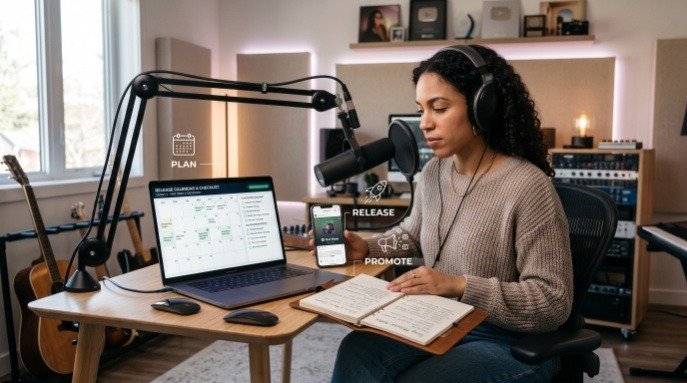
How to Promote Your Music While Protecting Your Authenticity
Independent music is often connected with individuality and creative freedom.
That makes authenticity an important part of promotion.
You do not have to copy every social media trend.
You do not have to present yourself in a way that feels uncomfortable.
You do not have to turn every personal experience into content.
Instead, identify what feels natural to your artistic identity.
Your promotional strategy should help listeners understand who you are—not force you to become someone else.
Frequently Asked Questions About How to Promote Your Music
How can an independent artist promote their music?
An independent artist can promote music through social media, short-form videos, streaming profiles, live performances, collaborations, interviews, playlists, direct audience communication, and consistent storytelling.
The best combination depends on the artist’s audience, genre, goals, and available resources.
How early should I start promoting a song?
It is generally useful to begin preparing and promoting a release before release day.
The exact timeline can vary depending on the type of release and promotional resources available.
Starting early gives you time to build awareness and prepare content.
How often should I promote my music?
There is no universal number of posts that works for every artist.
A sustainable schedule is usually more practical than trying to publish constantly.
Focus on creating useful, entertaining, interesting, or meaningful content rather than repeating the same promotional message.
How do I promote my music without a big budget?
Start with strategies that rely primarily on your existing skills and resources.
Performance videos, storytelling, collaborations, networking, live shows, audience engagement, and repurposing content can all contribute to promotion without requiring a large advertising budget.
Is social media enough to promote music?
Social media can be an important promotional channel, but it does not have to be the entire strategy.
Streaming platforms, live performances, networking, interviews, collaborations, direct communication, and other opportunities can complement social media.
How do I promote a song after release day?
Continue creating content around the song.
You can share live performances, acoustic versions, lyric explanations, behind-the-scenes material, interviews, listener reactions, and other relevant content.
A release can continue finding listeners long after its original launch.
Should independent artists pay for music promotion?
Paid promotion can be an option, but artists should understand what they are paying for and evaluate whether the service is legitimate and relevant to their goals.
Be cautious about services promising guaranteed streams, guaranteed playlist placement, or unrealistic results.
No legitimate strategy can guarantee that a song will become successful.
How can I get more listeners for my music?
Focus on making your music discoverable while giving potential listeners meaningful reasons to connect with it.
Clear artist identity, consistent content, storytelling, live performance, collaboration, audience engagement, and relevant discovery opportunities can all contribute to audience growth.
What is the most important part of music promotion?
There is no single tactic that guarantees success.
A strong foundation includes good music, a clear artistic identity, consistent communication, genuine audience engagement, and the patience to learn from each release.
Quick Summary: How to Promote Your Music
Learning how to promote your music is an ongoing part of building an independent music career.
The process can be summarized as:
Prepare → Create Awareness → Build Curiosity → Release → Engage → Analyze → Improve
Before release, prepare your content and introduce the story.
During release, make the music easy to discover and communicate clearly with your audience.
After release, continue sharing different aspects of the music rather than stopping promotional activity immediately.
Use social media, short-form video, streaming platforms, playlists, live performances, collaborations, interviews, networking, and direct fan engagement according to your goals and resources.
Most importantly, avoid measuring success only through follower counts or short-term streaming numbers.
A growing audience that genuinely connects with your music can be much more valuable than temporary attention.
Final Thoughts
Knowing how to promote your music is an important skill for today’s independent artist, but promotion should never replace the creative work itself.
Your music is the foundation.
Your story gives people context.
Your promotional strategy creates opportunities for discovery.
And your relationship with listeners gives them a reason to stay.
Independent musicians now have many tools for sharing their work, but having more tools does not mean you need to use every platform or follow every trend.
Start with a clear identity.
Understand the audience you want to reach.
Prepare each release carefully.
Create content that feels natural to you.
Tell the stories behind your music.
Engage genuinely with listeners.
Study what works.
Then improve your approach with every release.
There is no single formula for building an independent music career. What works for one artist may look completely different for another.
The most sustainable approach is to develop a promotion system that supports your music, your personality, your goals, and the audience you want to build.
Ultimately, how to promote your music is not just about getting more people to press play.
It is about helping the right people discover your artistic voice—and giving them a reason to come back for what you create next.